One brain. Every screen in the car.
Ama is the flagship, not the whole roster. That same shoebox drives the radio, the weather, the maps, the climate and the phone — and every one of them is Little Shiro in a different uniform. Pick a character below to see what she keeps track of on that screen. She loses signal, not her mind.
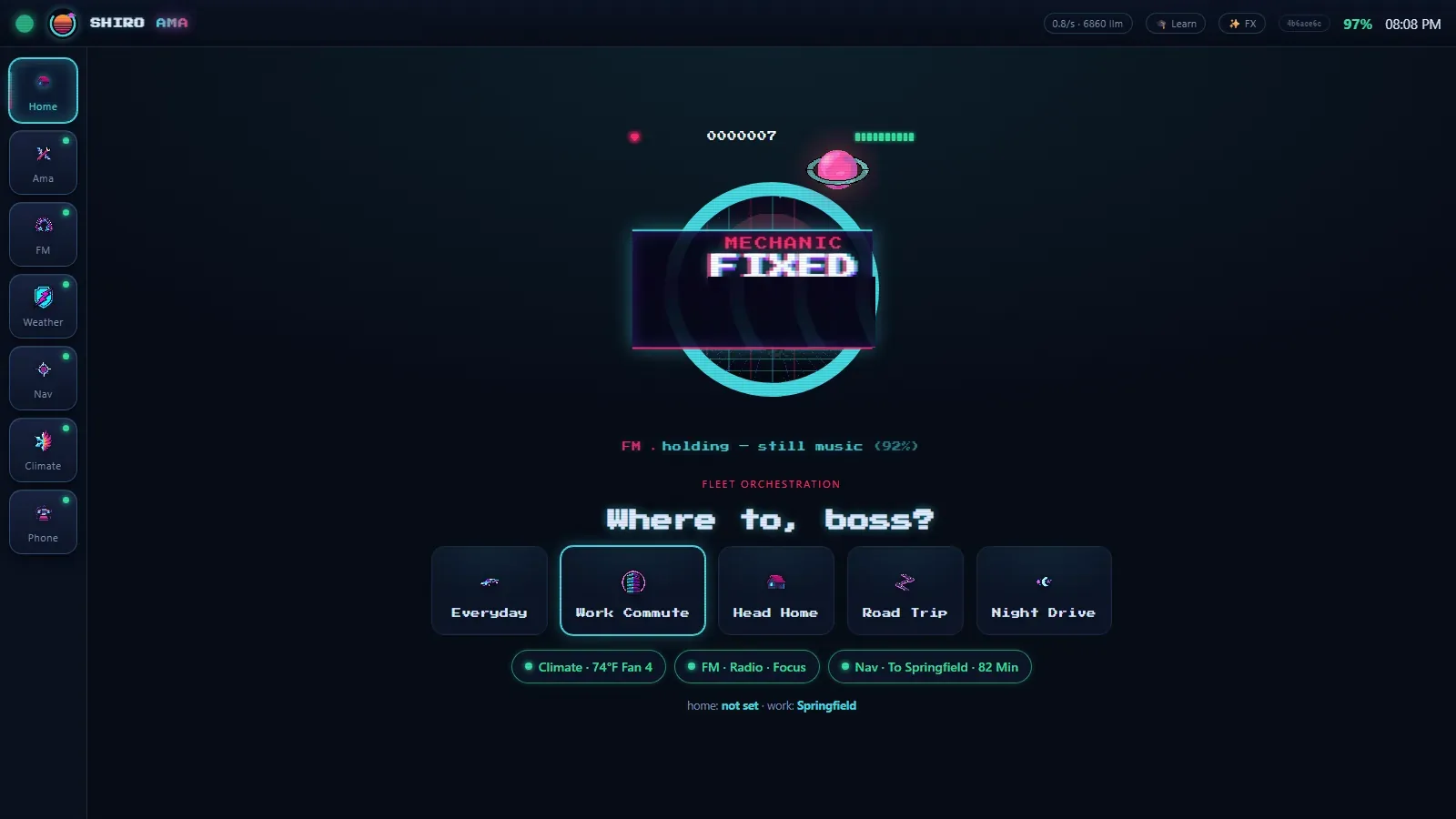
The cockpit — one home screen that sets up the whole car. It asks “Where to, boss?”, you pick a drive mode, and the entire crew configures itself for that trip: climate, radio, route, all at once. Up top lives the emblem — and what you see in this card is the real thing, running right now: Little Shiro in her world, a ringed planet drifting past.
▸ learns your habits — which screen, when
The flagship. Watches five systems at once and raises her hand the moment one of them starts behaving unlike itself.
▸ learns this exact car, every mile
A radio with a DJ in it — presets, a live EQ, and a caption for every track it spins.
▸ learns your taste — what you keep, what you skip
The sky, drawn live on screen — storms roll in before the first drop, with a plain-language alert banner.
▸ learns which warnings matter to you
Turn-by-turn with a memory — it knows your roads, not just the map's averages.
▸ learns your traffic, drive by drive
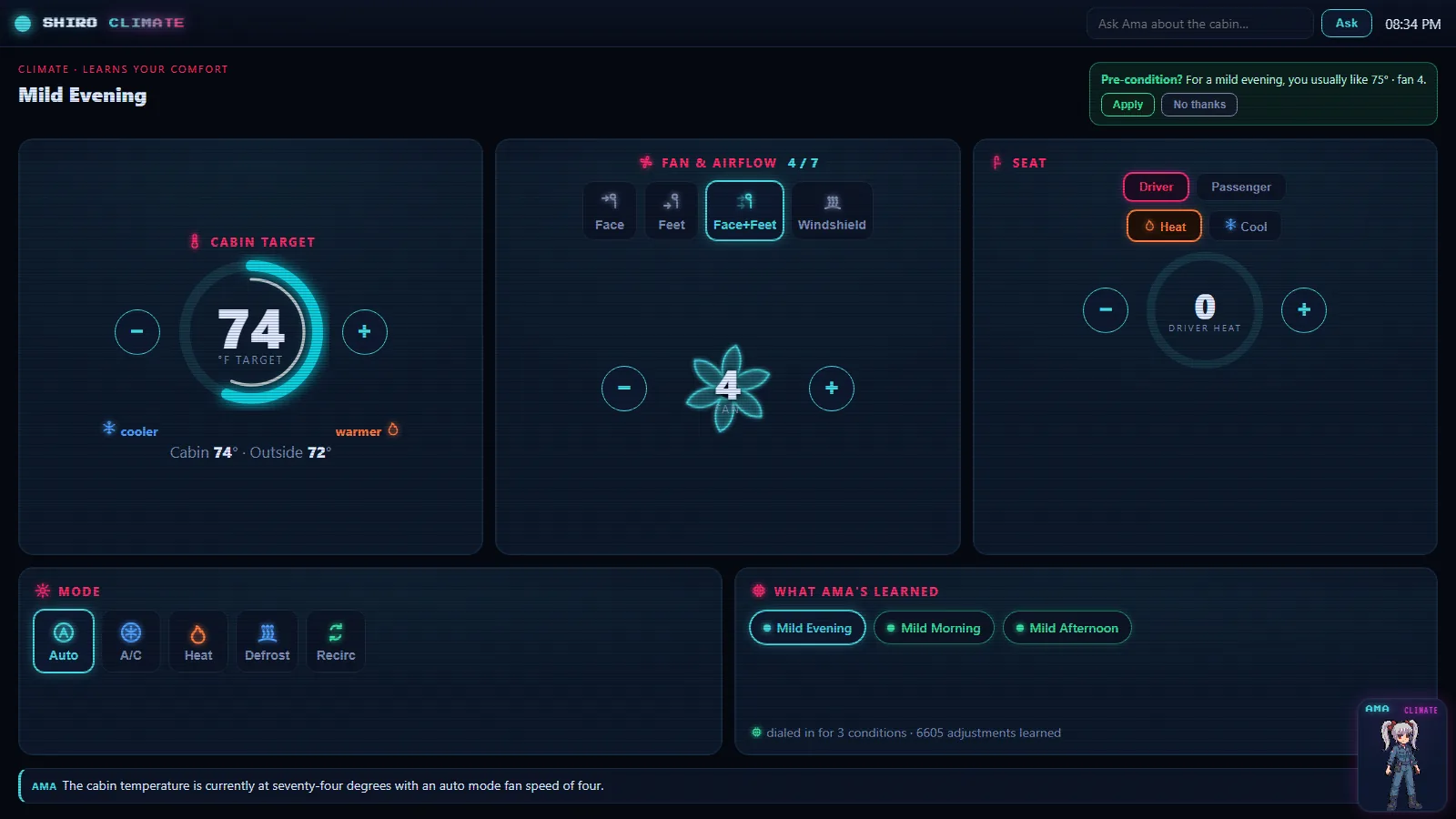
Set nothing. Temp, fan, and airflow dialed in for the weather outside the glass.
▸ learns your comfort, condition by condition
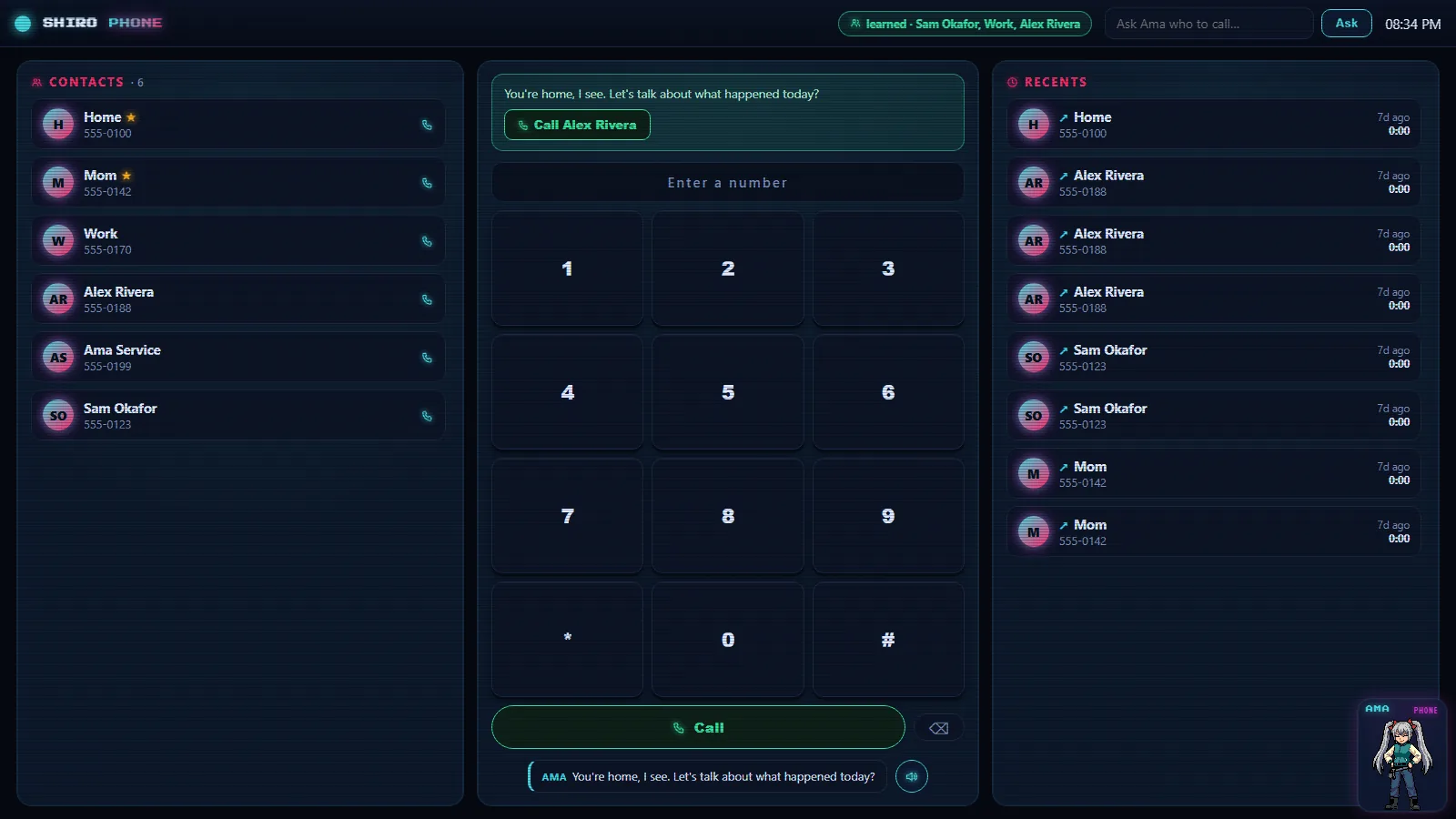
Calls without picking up a phone — big targets, favorites first, nothing buried three menus deep.
▸ learns your people — top contacts, one tap